Vi flyttar från butik till nätet - så funkar det framåt
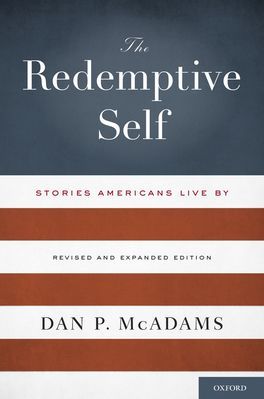
The Redemptive Self
- Danskt band, Engelska, 2013
- Författare: Dan P. McAdams
- Betyg:
986
kr
Skickas inom 0-2 vardagar
Onlinelager
I lager hos leverantör
Vill du sälja den här boken?
Sälj den här bokenBeskrivning
How do we as Americans define our identities? How do our stories represent who we are-our successes, our failures, our past, our future? Stories of redemption are some of the most powerful ways to express American identity and all that it can entail, from pain and anguish to joy and fulfillment. Psychologist Dan P. McAdams examines how these narratives, in which the hero is delivered from suffering to an enhanced status or state, represent a new psychology of American identity, and in turn, how they translate to understanding our own lives.
In this revised and expanded edition of The Redemptive Self, McAdams shows how redemptive stories promote psychological health and civic engagement among contemporary American adults. He reveals how different kinds of redemptive stories compete for favor in American society, as presented in a dramatic case study comparing the life stories constructed by Presidents George W. Bush and Barack Obama. McAdams provides new insight on race and religion in American narratives, offers a creative blend of psychological research and historical analysis, and explains how the redemptive self is a positive psychological resource for living a worthy American life. From the spiritual testimonials of the Puritans and the celebrated autobiography of Benjamin Franklin, to the harrowing stories of escaped slaves and the modern tales in Hollywood movies, we are surrounded by transformative stories that can inform how we make sense of our American identity.
But is the redemptive life story always a good thing, and can anyone achieve it? While affirming the significance of redemptive life stories, McAdams also offers a cultural critique. Through no fault of their own, many Americans cannot achieve this revered story of deliverance. Instead, their lives are rife with contaminated plots, vicious cycles of disappointment, and endless pitfalls. Moreover, there may be a negative side to these beloved stories of redemption-they demonstrate a curiously American form of arrogance, self-righteousness, and naiveté that all bad things can be transformed. In this revised and expanded edition of the his award-winning book, McAdams encourages us to critically examine our own life stories-the good, the bad, the ups, the downs-in order to inform how we can benefit from them and shape a better future American identity.
In this revised and expanded edition of The Redemptive Self, McAdams shows how redemptive stories promote psychological health and civic engagement among contemporary American adults. He reveals how different kinds of redemptive stories compete for favor in American society, as presented in a dramatic case study comparing the life stories constructed by Presidents George W. Bush and Barack Obama. McAdams provides new insight on race and religion in American narratives, offers a creative blend of psychological research and historical analysis, and explains how the redemptive self is a positive psychological resource for living a worthy American life. From the spiritual testimonials of the Puritans and the celebrated autobiography of Benjamin Franklin, to the harrowing stories of escaped slaves and the modern tales in Hollywood movies, we are surrounded by transformative stories that can inform how we make sense of our American identity.
But is the redemptive life story always a good thing, and can anyone achieve it? While affirming the significance of redemptive life stories, McAdams also offers a cultural critique. Through no fault of their own, many Americans cannot achieve this revered story of deliverance. Instead, their lives are rife with contaminated plots, vicious cycles of disappointment, and endless pitfalls. Moreover, there may be a negative side to these beloved stories of redemption-they demonstrate a curiously American form of arrogance, self-righteousness, and naiveté that all bad things can be transformed. In this revised and expanded edition of the his award-winning book, McAdams encourages us to critically examine our own life stories-the good, the bad, the ups, the downs-in order to inform how we can benefit from them and shape a better future American identity.
Om denna bok
The Redemptive Self av Dan P. McAdams är en Danskt band bok med 400 sidor på Engelska. Den utgavs 2013 av Oxford University Press.
Spara pengar – köp begagnad från Campusbokhandeln
Köp The Redemptive Self begagnad från Campusbokhandeln och spara upp till 25% jämfört med nypris. Du kan bevaka den här boken så får du ett mail så fort vi får in den i lager som begagnad.
Genom att köpa & sälja begagnat sänker du kostnaden för studier både för dig och nästa student samtidigt som du gör nytta för klimatet.
Produktinformation
Kategori:
Okänd
Bandtyp:
Danskt band
Språk:
Engelska
ISBN:
9780199969753
Utgiven:
2013-02-14
Förlag:
Oxford University Press
Sidantal:
400