Vi flyttar från butik till nätet - så funkar det framåt
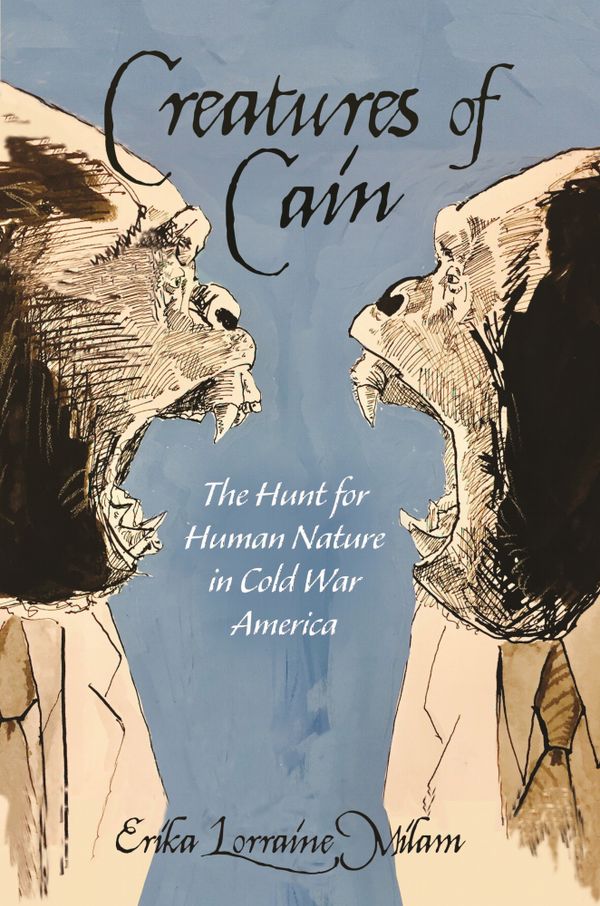
Creatures of Cain
- Danskt band, Engelska, 2020
- Författare: Erika Lorraine Milam
- Betyg:
420
kr
Skickas inom 1-3 vardagar
Onlinelager
I lager hos leverantör
Vill du sälja den här boken?
Sälj den här bokenBeskrivning
How Cold War America came to attribute human evolutionary success to our species' unique capacity for murder
After World War II, the question of how to define a universal human nature took on new urgency. Creatures of Cain charts the rise and precipitous fall in Cold War America of a theory that attributed man’s evolutionary success to his unique capacity for murder.
Drawing on a wealth of archival materials and in-depth interviews, Erika Lorraine Milam reveals how the scientists who advanced this “killer ape” theory capitalized on an expanding postwar market in intellectual paperbacks and widespread faith in the power of science to solve humanity’s problems, even to answer the most fundamental questions of human identity. The killer ape theory spread quickly from colloquial science publications to late-night television, classrooms, political debates, and Hollywood films. Behind the scenes, however, scientists were sharply divided, their disagreements centering squarely on questions of race and gender. Then, in the 1970s, the theory unraveled altogether when primatologists discovered that chimpanzees also kill members of their own species. While the discovery brought an end to definitions of human exceptionalism delineated by violence, Milam shows how some evolutionists began to argue for a shared chimpanzee-human history of aggression even as other scientists discredited such theories as sloppy popularizations.
A wide-ranging account of a compelling episode in American science, Creatures of Cain argues that the legacy of the killer ape persists today in the conviction that science can resolve the essential dilemmas of human nature.
After World War II, the question of how to define a universal human nature took on new urgency. Creatures of Cain charts the rise and precipitous fall in Cold War America of a theory that attributed man’s evolutionary success to his unique capacity for murder.
Drawing on a wealth of archival materials and in-depth interviews, Erika Lorraine Milam reveals how the scientists who advanced this “killer ape” theory capitalized on an expanding postwar market in intellectual paperbacks and widespread faith in the power of science to solve humanity’s problems, even to answer the most fundamental questions of human identity. The killer ape theory spread quickly from colloquial science publications to late-night television, classrooms, political debates, and Hollywood films. Behind the scenes, however, scientists were sharply divided, their disagreements centering squarely on questions of race and gender. Then, in the 1970s, the theory unraveled altogether when primatologists discovered that chimpanzees also kill members of their own species. While the discovery brought an end to definitions of human exceptionalism delineated by violence, Milam shows how some evolutionists began to argue for a shared chimpanzee-human history of aggression even as other scientists discredited such theories as sloppy popularizations.
A wide-ranging account of a compelling episode in American science, Creatures of Cain argues that the legacy of the killer ape persists today in the conviction that science can resolve the essential dilemmas of human nature.
Om denna bok
Creatures of Cain av Erika Lorraine Milam är en Danskt band bok med 408 sidor på Engelska. Den utgavs 2020 av John Wiley And Sons Ltd.
Spara pengar – köp begagnad från Campusbokhandeln
Köp Creatures of Cain begagnad från Campusbokhandeln och spara upp till 25% jämfört med nypris. Du kan bevaka den här boken så får du ett mail så fort vi får in den i lager som begagnad.
Genom att köpa & sälja begagnat sänker du kostnaden för studier både för dig och nästa student samtidigt som du gör nytta för klimatet.
Produktinformation
Kategori:
Okänd
Bandtyp:
Danskt band
Språk:
Engelska
ISBN:
9780691210438
Utgiven:
2020-11-03
Förlag:
John Wiley And Sons Ltd
Sidantal:
408