Vi flyttar från butik till nätet - så funkar det framåt
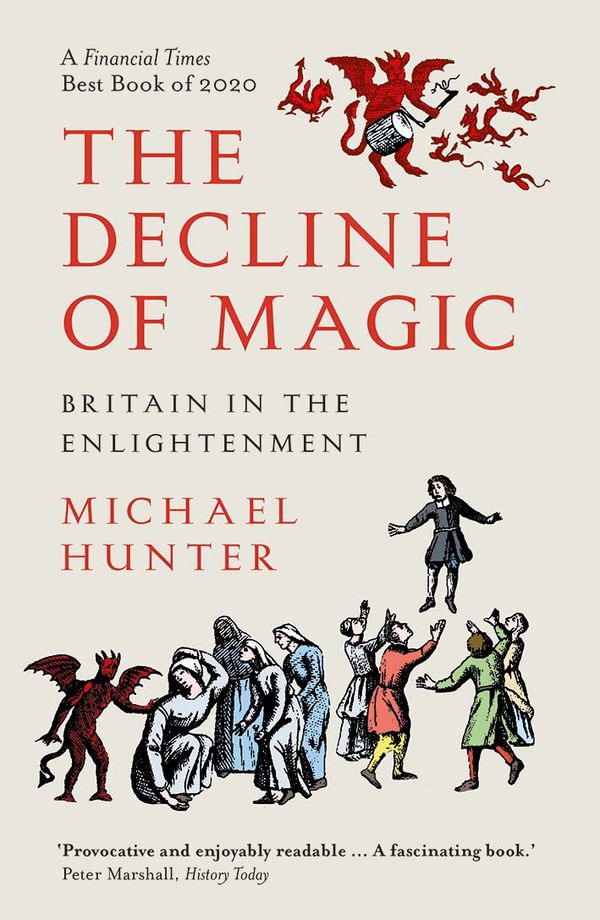
The Decline of Magic
- Danskt band, Engelska, 2021
- Författare: Michael Hunter
- Betyg:
160
kr
Skickas inom 1-3 vardagar
Onlinelager
I lager hos leverantör
Vill du sälja den här boken?
Sälj den här bokenBeskrivning
A new history that overturns the received wisdom that science displaced magic in Enlightenment Britain—named a Best Book of 2020 by the Financial Times
In early modern Britain, belief in prophecies, omens, ghosts, apparitions and fairies was commonplace. Among both educated and ordinary people the absolute existence of a spiritual world was taken for granted. Yet in the eighteenth century such certainties were swept away. Credit for this great change is usually given to science – and in particular to the scientists of the Royal Society. But is this justified?
Michael Hunter argues that those pioneering the change in attitude were not scientists but freethinkers. While some scientists defended the reality of supernatural phenomena, these sceptical humanists drew on ancient authors to mount a critique both of orthodox religion and, by extension, of magic and other forms of superstition. Even if the religious heterodoxy of such men tarnished their reputation and postponed the general acceptance of anti-magical views, slowly change did come about. When it did, this owed less to the testing of magic than to the growth of confidence in a stable world in which magic no longer had a place.
In early modern Britain, belief in prophecies, omens, ghosts, apparitions and fairies was commonplace. Among both educated and ordinary people the absolute existence of a spiritual world was taken for granted. Yet in the eighteenth century such certainties were swept away. Credit for this great change is usually given to science – and in particular to the scientists of the Royal Society. But is this justified?
Michael Hunter argues that those pioneering the change in attitude were not scientists but freethinkers. While some scientists defended the reality of supernatural phenomena, these sceptical humanists drew on ancient authors to mount a critique both of orthodox religion and, by extension, of magic and other forms of superstition. Even if the religious heterodoxy of such men tarnished their reputation and postponed the general acceptance of anti-magical views, slowly change did come about. When it did, this owed less to the testing of magic than to the growth of confidence in a stable world in which magic no longer had a place.
Om denna bok
The Decline of Magic av Michael Hunter är en Danskt band bok med 256 sidor på Engelska. Den utgavs 2021 av John Wiley And Sons Ltd.
Spara pengar – köp begagnad från Campusbokhandeln
Köp The Decline of Magic begagnad från Campusbokhandeln och spara upp till 25% jämfört med nypris. Du kan bevaka den här boken så får du ett mail så fort vi får in den i lager som begagnad.
Genom att köpa & sälja begagnat sänker du kostnaden för studier både för dig och nästa student samtidigt som du gör nytta för klimatet.
Produktinformation
Kategori:
Okänd
Bandtyp:
Danskt band
Språk:
Engelska
ISBN:
9780300260953
Utgiven:
2021-10-12
Förlag:
John Wiley And Sons Ltd
Sidantal:
256