Vi flyttar från butik till nätet - så funkar det framåt
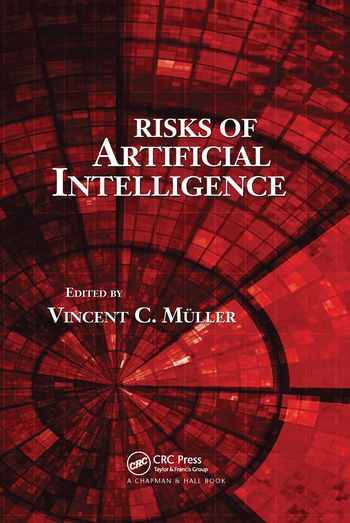
Risks of Artificial Intelligence | 1:a upplagan
- Danskt band, Engelska, 2020
- Författare: Vincent C. Müller
- Betyg:
567
kr
Skickas inom 1-3 vardagar
Butikslager
Onlinelager
I lager hos leverantör
$event.detail.name === 'store-selector' ? isOpen = true : ''"
@close-drawer.window="() => $event.detail.name === 'store-selector' ? isOpen = false : ''"
@keydown.escape.window="isOpen = false"
x-init="$watch('isOpen', value => {
if (value) {
$refs.dialog.showModal();
document.body.style.overflow = 'hidden';
//emit onDrawerOpen event
$dispatch('drawer-opened', {
name: 'store-selector'
});
} else {
setTimeout(() => {
$refs.dialog.showModal();
$refs.dialog.close();
}, 300);
document.body.style.overflow = '';
$dispatch('drawer-closed', {
name: 'store-selector'
});
}
});"
class="h-full"
>
Beskrivning
If the intelligence of artificial systems were to surpass that of humans, humanity would face significant risks. The time has come to consider these issues, and this consideration must include progress in artificial intelligence (AI) as much as insights from AI theory.
Featuring contributions from leading experts and thinkers in artificial intelligence, Risks of Artificial Intelligence is the first volume of collected chapters dedicated to examining the risks of AI. The book evaluates predictions of the future of AI, proposes ways to ensure that AI systems will be beneficial to humans, and then critically evaluates such proposals.
The book covers the latest research on the risks and future impacts of AI. It starts with an introduction to the problem of risk and the future of artificial intelligence, followed by a discussion (Armstrong/Sokala/ÓhÉigeartaigh) on how predictions of its future have fared to date.
Omohundro makes the point that even an innocuous artificial agent can easily turn into a serious threat for humans. T. Goertzel explains how to succeed in the design of artificial agents. But will these be a threat for humanity, or a useful tool? Ways to assure beneficial outcomes through ‘machine ethics’ and ‘utility functions’ are discussed by Brundage and Yampolskiy.
B. Goertzel and Potapov/Rodionov propose ‘learning’ and ‘empathy’ as paths towards safer AI while Kornai explains how the impact of AI may be bounded. Sandberg explains the implications of human-like AI via the technique of brain emulation. Dewey discusses strategies to deal with the ‘fast takeoff’ of artificial intelligence and, finally, Bishop explains why there is no need to worry because computers will remain in a state of ‘artificial stupidity’.
Sharing insights from leading thinkers in artificial intelligence, this book provides you with an expert-level perspective of what is on the horizon for AI, whether it will be a threat for humanity, and how we might counteract this threat.
Featuring contributions from leading experts and thinkers in artificial intelligence, Risks of Artificial Intelligence is the first volume of collected chapters dedicated to examining the risks of AI. The book evaluates predictions of the future of AI, proposes ways to ensure that AI systems will be beneficial to humans, and then critically evaluates such proposals.
The book covers the latest research on the risks and future impacts of AI. It starts with an introduction to the problem of risk and the future of artificial intelligence, followed by a discussion (Armstrong/Sokala/ÓhÉigeartaigh) on how predictions of its future have fared to date.
Omohundro makes the point that even an innocuous artificial agent can easily turn into a serious threat for humans. T. Goertzel explains how to succeed in the design of artificial agents. But will these be a threat for humanity, or a useful tool? Ways to assure beneficial outcomes through ‘machine ethics’ and ‘utility functions’ are discussed by Brundage and Yampolskiy.
B. Goertzel and Potapov/Rodionov propose ‘learning’ and ‘empathy’ as paths towards safer AI while Kornai explains how the impact of AI may be bounded. Sandberg explains the implications of human-like AI via the technique of brain emulation. Dewey discusses strategies to deal with the ‘fast takeoff’ of artificial intelligence and, finally, Bishop explains why there is no need to worry because computers will remain in a state of ‘artificial stupidity’.
Sharing insights from leading thinkers in artificial intelligence, this book provides you with an expert-level perspective of what is on the horizon for AI, whether it will be a threat for humanity, and how we might counteract this threat.
Om denna bok
Risks of Artificial Intelligence av Vincent C. Müller är en Danskt band bok med 302 sidor på Engelska. Detta är den 1:a upplagan som utgavs 2020.
Spara pengar – köp begagnad från Campusbokhandeln
Köp Risks of Artificial Intelligence begagnad från Campusbokhandeln och spara upp till 25% jämfört med nypris. Du kan bevaka den här boken så får du ett mail så fort vi får in den i lager som begagnad.
Genom att köpa & sälja begagnat sänker du kostnaden för studier både för dig och nästa student samtidigt som du gör nytta för klimatet.
Produktinformation
Kategori:
Okänd
Bandtyp:
Danskt band
Språk:
Engelska
ISBN:
9780367575182
Upplaga:
1
Utgiven:
2020-06-30
Förlag:
Okänt
Sidantal:
302
$event.detail.name === 'primary-menu' ? isOpen = true : ''"
@close-drawer.window="() => $event.detail.name === 'primary-menu' ? isOpen = false : ''"
@keydown.escape.window="isOpen = false"
x-init="$watch('isOpen', value => {
if (value) {
$refs.dialog.showModal();
document.body.style.overflow = 'hidden';
//emit onDrawerOpen event
$dispatch('drawer-opened', {
name: 'primary-menu'
});
} else {
setTimeout(() => {
$refs.dialog.showModal();
$refs.dialog.close();
}, 300);
document.body.style.overflow = '';
$dispatch('drawer-closed', {
name: 'primary-menu'
});
}
});"
class="h-full"
>
$event.detail.name === 'mobile-search' ? isOpen = true : ''"
@close-drawer.window="() => $event.detail.name === 'mobile-search' ? isOpen = false : ''"
@keydown.escape.window="isOpen = false"
x-init="$watch('isOpen', value => {
if (value) {
$refs.dialog.showModal();
document.body.style.overflow = 'hidden';
//emit onDrawerOpen event
$dispatch('drawer-opened', {
name: 'mobile-search'
});
} else {
setTimeout(() => {
$refs.dialog.showModal();
$refs.dialog.close();
}, 300);
document.body.style.overflow = '';
$dispatch('drawer-closed', {
name: 'mobile-search'
});
}
});"
class="h-full"
>
$event.detail.name === 'mini-cart' ? isOpen = true : ''"
@close-drawer.window="() => $event.detail.name === 'mini-cart' ? isOpen = false : ''"
@keydown.escape.window="isOpen = false"
x-init="$watch('isOpen', value => {
if (value) {
$refs.dialog.showModal();
document.body.style.overflow = 'hidden';
//emit onDrawerOpen event
$dispatch('drawer-opened', {
name: 'mini-cart'
});
} else {
setTimeout(() => {
$refs.dialog.showModal();
$refs.dialog.close();
}, 300);
document.body.style.overflow = '';
$dispatch('drawer-closed', {
name: 'mini-cart'
});
}
});"
class="h-full"
>
$event.detail.name === 'add-to-cart' ? isOpen = true : ''"
@close-drawer.window="() => $event.detail.name === 'add-to-cart' ? isOpen = false : ''"
@keydown.escape.window="isOpen = false"
x-init="$watch('isOpen', value => {
if (value) {
$refs.dialog.showModal();
document.body.style.overflow = 'hidden';
//emit onDrawerOpen event
$dispatch('drawer-opened', {
name: 'add-to-cart'
});
} else {
setTimeout(() => {
$refs.dialog.showModal();
$refs.dialog.close();
}, 300);
document.body.style.overflow = '';
$dispatch('drawer-closed', {
name: 'add-to-cart'
});
}
});"
class="h-full"
>