Välkommen tillbaka till Campusbokhandeln! Vi firar med inlämningskampanj: Lämna in din kurslitteratur – få 150 :- och chansen att vinna 1 000 :-. Läs mer här!
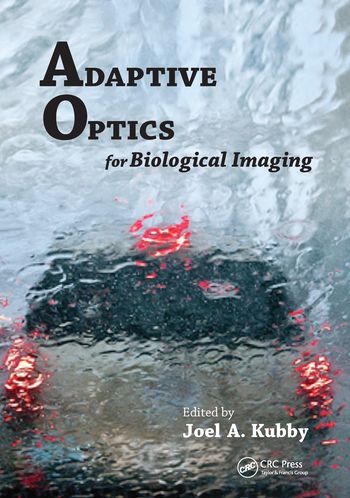
Adaptive Optics for Biological Imaging | 1:a upplagan
- Danskt band, Engelska, 2020
- Författare: Joel A Kubby
- Betyg:
567
kr
Skickas inom 12-13 vardagar
Butikslager
Onlinelager
I lager hos leverantör
$event.detail.name === 'store-selector' ? isOpen = true : ''"
@close-drawer.window="() => $event.detail.name === 'store-selector' ? isOpen = false : ''"
@keydown.escape.window="isOpen = false"
x-init="$watch('isOpen', value => {
if (value) {
$refs.dialog.showModal();
document.body.style.overflow = 'hidden';
//emit onDrawerOpen event
$dispatch('drawer-opened', {
name: 'store-selector'
});
} else {
setTimeout(() => {
$refs.dialog.showModal();
$refs.dialog.close();
}, 300);
document.body.style.overflow = '';
$dispatch('drawer-closed', {
name: 'store-selector'
});
}
});"
class="h-full"
>
Beskrivning
Adaptive Optics for Biological Imaging brings together groundbreaking research on the use of adaptive optics for biological imaging. The book builds on prior work in astronomy and vision science. Featuring contributions by leaders in this emerging field, it takes an interdisciplinary approach that makes the subject accessible to nonspecialists who want to use adaptive optics techniques in their own work in biology and bioengineering.
Organized into three parts, the book covers principles, methods, and applications of adaptive optics for biological imaging, providing the reader with the following benefits:
Gives a general overview of applied optics, including definitions and vocabulary, to lay a foundation for clearer communication across disciplines
Explains what kinds of optical aberrations arise in imaging through various biological tissues, and what technology can be used to correct for these aberrations
Explores research done with a variety of biological samples and imaging instruments, including wide-field, confocal, and two-photon microscopes
Discusses both indirect wavefront sensing, which uses an iterative approach, and direct wavefront sensing, which uses a parallel approach
Since the sample is an integral part of the optical system in biological imaging, the field will benefit from participation by biologists and biomedical researchers with expertise in applied optics. This book helps lower the barriers to entry for these researchers. It also guides readers in selecting the approach that works best for their own applications.
Organized into three parts, the book covers principles, methods, and applications of adaptive optics for biological imaging, providing the reader with the following benefits:
Gives a general overview of applied optics, including definitions and vocabulary, to lay a foundation for clearer communication across disciplines
Explains what kinds of optical aberrations arise in imaging through various biological tissues, and what technology can be used to correct for these aberrations
Explores research done with a variety of biological samples and imaging instruments, including wide-field, confocal, and two-photon microscopes
Discusses both indirect wavefront sensing, which uses an iterative approach, and direct wavefront sensing, which uses a parallel approach
Since the sample is an integral part of the optical system in biological imaging, the field will benefit from participation by biologists and biomedical researchers with expertise in applied optics. This book helps lower the barriers to entry for these researchers. It also guides readers in selecting the approach that works best for their own applications.
Produktinformation
Kategori:
Naturvetenskap & teknik
Bandtyp:
Danskt band
Språk:
Engelska
Förlag:
Okänt
Upplaga:
1
Utgiven:
2020-06-30
ISBN:
9780367576462
Sidantal:
388
$event.detail.name === 'primary-menu' ? isOpen = true : ''"
@close-drawer.window="() => $event.detail.name === 'primary-menu' ? isOpen = false : ''"
@keydown.escape.window="isOpen = false"
x-init="$watch('isOpen', value => {
if (value) {
$refs.dialog.showModal();
document.body.style.overflow = 'hidden';
//emit onDrawerOpen event
$dispatch('drawer-opened', {
name: 'primary-menu'
});
} else {
setTimeout(() => {
$refs.dialog.showModal();
$refs.dialog.close();
}, 300);
document.body.style.overflow = '';
$dispatch('drawer-closed', {
name: 'primary-menu'
});
}
});"
class="h-full"
>
$event.detail.name === 'mobile-search' ? isOpen = true : ''"
@close-drawer.window="() => $event.detail.name === 'mobile-search' ? isOpen = false : ''"
@keydown.escape.window="isOpen = false"
x-init="$watch('isOpen', value => {
if (value) {
$refs.dialog.showModal();
document.body.style.overflow = 'hidden';
//emit onDrawerOpen event
$dispatch('drawer-opened', {
name: 'mobile-search'
});
} else {
setTimeout(() => {
$refs.dialog.showModal();
$refs.dialog.close();
}, 300);
document.body.style.overflow = '';
$dispatch('drawer-closed', {
name: 'mobile-search'
});
}
});"
class="h-full"
>
$event.detail.name === 'mini-cart' ? isOpen = true : ''"
@close-drawer.window="() => $event.detail.name === 'mini-cart' ? isOpen = false : ''"
@keydown.escape.window="isOpen = false"
x-init="$watch('isOpen', value => {
if (value) {
$refs.dialog.showModal();
document.body.style.overflow = 'hidden';
//emit onDrawerOpen event
$dispatch('drawer-opened', {
name: 'mini-cart'
});
} else {
setTimeout(() => {
$refs.dialog.showModal();
$refs.dialog.close();
}, 300);
document.body.style.overflow = '';
$dispatch('drawer-closed', {
name: 'mini-cart'
});
}
});"
class="h-full"
>
$event.detail.name === 'add-to-cart' ? isOpen = true : ''"
@close-drawer.window="() => $event.detail.name === 'add-to-cart' ? isOpen = false : ''"
@keydown.escape.window="isOpen = false"
x-init="$watch('isOpen', value => {
if (value) {
$refs.dialog.showModal();
document.body.style.overflow = 'hidden';
//emit onDrawerOpen event
$dispatch('drawer-opened', {
name: 'add-to-cart'
});
} else {
setTimeout(() => {
$refs.dialog.showModal();
$refs.dialog.close();
}, 300);
document.body.style.overflow = '';
$dispatch('drawer-closed', {
name: 'add-to-cart'
});
}
});"
class="h-full"
>