Vi flyttar från butik till nätet - så funkar det framåt
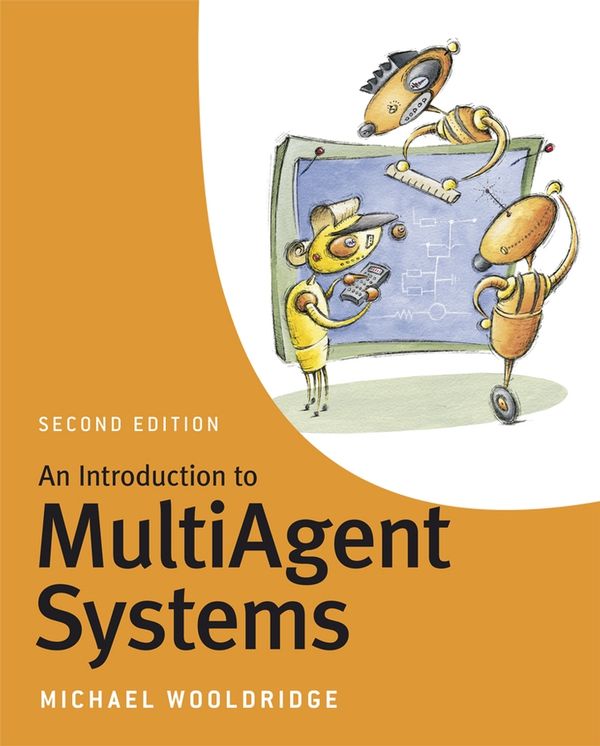
An Introduction to MultiAgent Systems | 2:a upplagan
- Danskt band, Engelska, 2009
- Författare: Michael Wooldridge
- Betyg:
Välj skick:
Bästa pris
604
kr
Skickas nästa vardag
Du sparar 138 kr
(19%)
mot nypris
742
kr
Skickas inom 0-2 vardagar
Butikslager
Onlinelager
2 st i lager
Beskrivning
The study of multi-agent systems (MAS) focuses on systems in which many intelligent agents interact with each other. These agents are considered to be autonomous entities such as software programs or robots. Their interactions can either be cooperative (for example as in an ant colony) or selfish (as in a free market economy). This book assumes only basic knowledge of algorithms and discrete maths, both of which are taught as standard in the first or second year of computer science degree programmes. A basic knowledge of artificial intelligence would useful to help understand some of the issues, but is not essential. The book’s main aims are:
To introduce the student to the concept of agents and multi-agent systems, and the main applications for which they are appropriate
To introduce the main issues surrounding the design of intelligent agents
To introduce the main issues surrounding the design of a multi-agent society
To introduce a number of typical applications for agent technology
After reading the book the student should understand:
The notion of an agent, how agents are distinct from other software paradigms (e.g. objects) and the characteristics of applications that lend themselves to agent-oriented software
The key issues associated with constructing agents capable of intelligent autonomous action and the main approaches taken to developing such agents
The key issues in designing societies of agents that can effectively cooperate in order to solve problems, including an understanding of the key types of multi-agent interactions possible in such systems
The main application areas of agent-based systems
To introduce the student to the concept of agents and multi-agent systems, and the main applications for which they are appropriate
To introduce the main issues surrounding the design of intelligent agents
To introduce the main issues surrounding the design of a multi-agent society
To introduce a number of typical applications for agent technology
After reading the book the student should understand:
The notion of an agent, how agents are distinct from other software paradigms (e.g. objects) and the characteristics of applications that lend themselves to agent-oriented software
The key issues associated with constructing agents capable of intelligent autonomous action and the main approaches taken to developing such agents
The key issues in designing societies of agents that can effectively cooperate in order to solve problems, including an understanding of the key types of multi-agent interactions possible in such systems
The main application areas of agent-based systems
Om denna bok
An Introduction to MultiAgent Systems av Michael Wooldridge är en Danskt band bok med 488 sidor på Engelska. Detta är den 2:a upplagan som utgavs 2009 av John Wiley And Sons Ltd.
Spara pengar – köp begagnad från Campusbokhandeln
Köp An Introduction to MultiAgent Systems begagnad från Campusbokhandeln och spara upp till 19% jämfört med nypris. Begagnade exemplar finns från 604 kr medan nya kostar 742 kr – en besparing på 138 kr. Köp tryggt med Campusbokhandeln.
Genom att köpa & sälja begagnat sänker du kostnaden för studier både för dig och nästa student samtidigt som du gör nytta för klimatet.
Används vid svenska universitet
Denna kurslitteratur används aktivt i 4 universitetskurser vid lärosäten runt om i Sverige, inklusive:
Boken är särskilt populär inom Data & IT-programmen.
Produktinformation
Kategori:
Data & IT
Bandtyp:
Danskt band
Språk:
Engelska
ISBN:
9780470519462
Upplaga:
2
Utgiven:
2009-07-31
Förlag:
John Wiley And Sons Ltd
Sidantal:
488