Vi flyttar från butik till nätet - så funkar det framåt
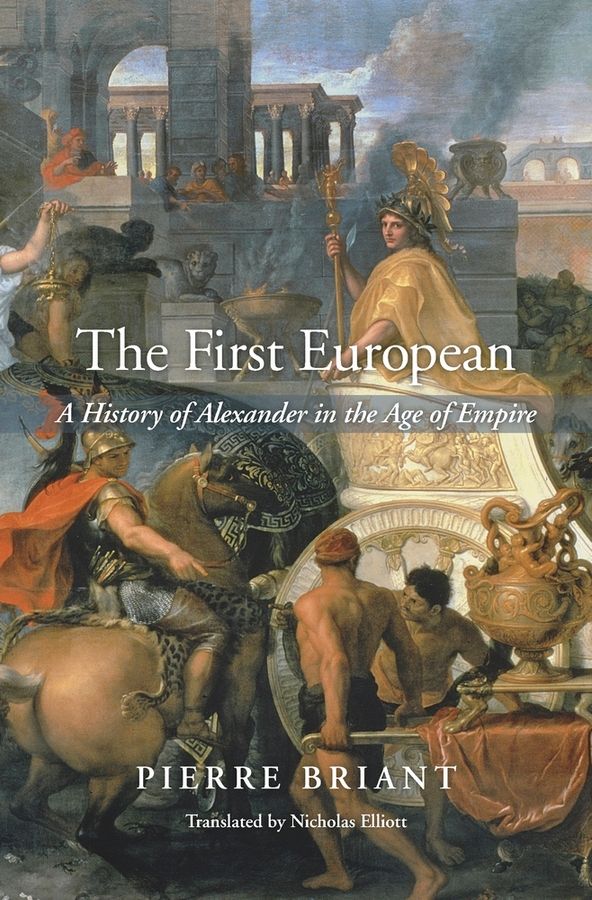
The First European
- Danskt band, Engelska, 2017
- Författare: Pierre Briant
- Betyg:
412
kr
Skickas inom 1-3 vardagar
Onlinelager
I lager hos leverantör
Vill du sälja den här boken?
Sälj den här bokenBeskrivning
The exploits of Alexander the Great were so remarkable that for centuries after his death the Macedonian ruler seemed a figure more of legend than of history. Thinkers of the European Enlightenment, searching for ancient models to understand contemporary affairs, were the first to critically interpret Alexander’s achievements. As Pierre Briant shows, in the minds of eighteenth-century intellectuals and philosophes, Alexander was the first European: a successful creator of empire who opened the door to new sources of trade and scientific knowledge, and an enlightened leader who brought the fruits of Western civilization to an oppressed and backward “Orient.”
In France, Scotland, England, and Germany, Alexander the Great became an important point of reference in discourses from philosophy and history to political economy and geography. Voltaire, Montesquieu, and Robertson asked what lessons Alexander’s empire-building had to teach modern Europeans. They saw the ancient Macedonian as the embodiment of the rational and benevolent Western ruler, a historical model to be emulated as Western powers accelerated their colonial expansion into Asia, India, and the Middle East.
For a Europe that had to contend with the formidable Ottoman Empire, Alexander provided an important precedent as the conqueror who had brought great tyrants of the “Orient” to heel. As The First European makes clear, in the minds of Europe’s leading thinkers, Alexander was not an aggressive militarist but a civilizing force whose conquests revitalized Asian lands that had lain stagnant for centuries under the lash of despotic rulers.
In France, Scotland, England, and Germany, Alexander the Great became an important point of reference in discourses from philosophy and history to political economy and geography. Voltaire, Montesquieu, and Robertson asked what lessons Alexander’s empire-building had to teach modern Europeans. They saw the ancient Macedonian as the embodiment of the rational and benevolent Western ruler, a historical model to be emulated as Western powers accelerated their colonial expansion into Asia, India, and the Middle East.
For a Europe that had to contend with the formidable Ottoman Empire, Alexander provided an important precedent as the conqueror who had brought great tyrants of the “Orient” to heel. As The First European makes clear, in the minds of Europe’s leading thinkers, Alexander was not an aggressive militarist but a civilizing force whose conquests revitalized Asian lands that had lain stagnant for centuries under the lash of despotic rulers.
Om denna bok
The First European av Pierre Briant är en Danskt band bok med 496 sidor på Engelska. Den utgavs 2017 av Harvard University Press.
Spara pengar – köp begagnad från Campusbokhandeln
Köp The First European begagnad från Campusbokhandeln och spara upp till 25% jämfört med nypris. Du kan bevaka den här boken så får du ett mail så fort vi får in den i lager som begagnad.
Genom att köpa & sälja begagnat sänker du kostnaden för studier både för dig och nästa student samtidigt som du gör nytta för klimatet.
Produktinformation
Kategori:
Historia & arkeologi
Bandtyp:
Danskt band
Språk:
Engelska
ISBN:
9780674659667
Utgiven:
2017-01-02
Förlag:
Harvard University Press
Sidantal:
496