Sälj dina kursböcker, vinn presentkort på 1000 kr. Läs mer här
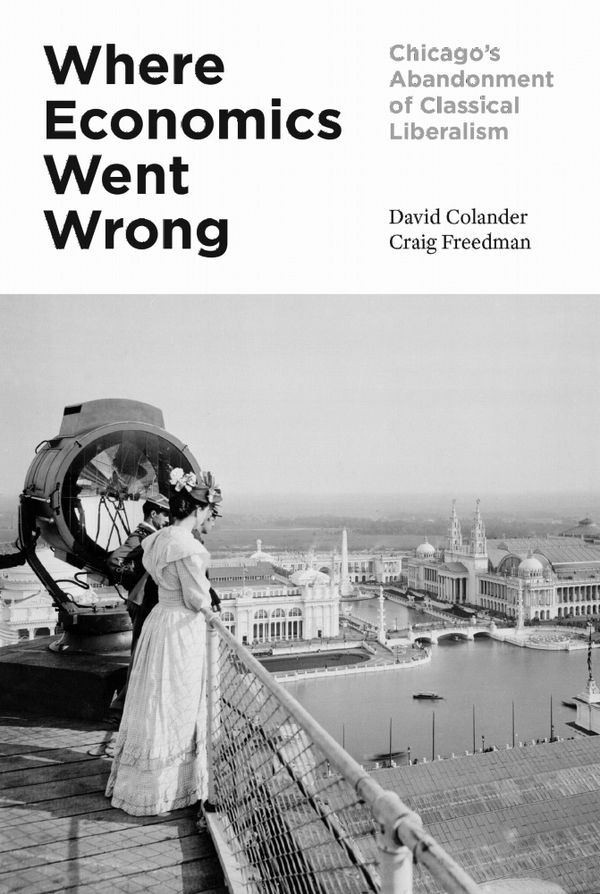
Where Economics Went Wrong | 0:e upplagan
- Danskt band, Engelska, 2018
- Författare: David Colander, Craig Freedman
- Betyg:
390
kr
Skickas inom 0-2 vardagar
Butikslager
Onlinelager
I lager hos leverantör
$event.detail.name === 'store-selector' ? isOpen = true : ''"
@close-drawer.window="() => $event.detail.name === 'store-selector' ? isOpen = false : ''"
@keydown.escape.window="isOpen = false"
x-init="$watch('isOpen', value => {
if (value) {
$refs.dialog.showModal();
document.body.style.overflow = 'hidden';
//emit onDrawerOpen event
$dispatch('drawer-opened', {
name: 'store-selector'
});
} else {
setTimeout(() => {
$refs.dialog.showModal();
$refs.dialog.close();
}, 300);
document.body.style.overflow = '';
$dispatch('drawer-closed', {
name: 'store-selector'
});
}
});"
class="h-full"
>
Beskrivning
How modern economics abandoned classical liberalism and lost its way
Milton Friedman once predicted that advances in scientific economics would resolve debates about whether raising the minimum wage is good policy. Decades later, Friedman’s prediction has not come true. In Where Economics Went Wrong, David Colander and Craig Freedman argue that it never will. Why? Because economic policy, when done correctly, is an art and a craft. It is not, and cannot be, a science. The authors explain why classical liberal economists understood this essential difference, why modern economists abandoned it, and why now is the time for the profession to return to its classical liberal roots.
Carefully distinguishing policy from science and theory, classical liberal economists emphasized values and context, treating economic policy analysis as a moral science where a dialogue of sensibilities and judgments allowed for the same scientific basis to arrive at a variety of policy recommendations. Using the University of Chicago—one of the last bastions of classical liberal economics—as a case study, Colander and Freedman examine how both the MIT and Chicago variants of modern economics eschewed classical liberalism in their attempt to make economic policy analysis a science. By examining the way in which the discipline managed to lose its bearings, the authors delve into such issues as the development of welfare economics in relation to economic science, alternative voices within the Chicago School, and exactly how Friedman got it wrong.
Contending that the division between science and prescription needs to be restored, Where Economics Went Wrong makes the case for a more nuanced and self-aware policy analysis by economists.
Milton Friedman once predicted that advances in scientific economics would resolve debates about whether raising the minimum wage is good policy. Decades later, Friedman’s prediction has not come true. In Where Economics Went Wrong, David Colander and Craig Freedman argue that it never will. Why? Because economic policy, when done correctly, is an art and a craft. It is not, and cannot be, a science. The authors explain why classical liberal economists understood this essential difference, why modern economists abandoned it, and why now is the time for the profession to return to its classical liberal roots.
Carefully distinguishing policy from science and theory, classical liberal economists emphasized values and context, treating economic policy analysis as a moral science where a dialogue of sensibilities and judgments allowed for the same scientific basis to arrive at a variety of policy recommendations. Using the University of Chicago—one of the last bastions of classical liberal economics—as a case study, Colander and Freedman examine how both the MIT and Chicago variants of modern economics eschewed classical liberalism in their attempt to make economic policy analysis a science. By examining the way in which the discipline managed to lose its bearings, the authors delve into such issues as the development of welfare economics in relation to economic science, alternative voices within the Chicago School, and exactly how Friedman got it wrong.
Contending that the division between science and prescription needs to be restored, Where Economics Went Wrong makes the case for a more nuanced and self-aware policy analysis by economists.
Om denna bok
Where Economics Went Wrong av David Colander och Craig Freedman är en Danskt band bok med 288 sidor på Engelska. Den utgavs 2018 av John Wiley And Sons Ltd.
Spara pengar – köp begagnad från Campusbokhandeln
Köp Where Economics Went Wrong begagnad från Campusbokhandeln och spara upp till 25% jämfört med nypris. Du kan bevaka den här boken så får du ett mail så fort vi får in den i lager som begagnad.
Genom att köpa & sälja begagnat sänker du kostnaden för studier både för dig och nästa student samtidigt som du gör nytta för klimatet.
Produktinformation
Kategori:
Ekonomi & management
Bandtyp:
Danskt band
Språk:
Engelska
ISBN:
9780691179209
Upplaga:
0
Utgiven:
2018-11-27
Förlag:
John Wiley And Sons Ltd
Sidantal:
288
$event.detail.name === 'primary-menu' ? isOpen = true : ''"
@close-drawer.window="() => $event.detail.name === 'primary-menu' ? isOpen = false : ''"
@keydown.escape.window="isOpen = false"
x-init="$watch('isOpen', value => {
if (value) {
$refs.dialog.showModal();
document.body.style.overflow = 'hidden';
//emit onDrawerOpen event
$dispatch('drawer-opened', {
name: 'primary-menu'
});
} else {
setTimeout(() => {
$refs.dialog.showModal();
$refs.dialog.close();
}, 300);
document.body.style.overflow = '';
$dispatch('drawer-closed', {
name: 'primary-menu'
});
}
});"
class="h-full"
>
$event.detail.name === 'mobile-search' ? isOpen = true : ''"
@close-drawer.window="() => $event.detail.name === 'mobile-search' ? isOpen = false : ''"
@keydown.escape.window="isOpen = false"
x-init="$watch('isOpen', value => {
if (value) {
$refs.dialog.showModal();
document.body.style.overflow = 'hidden';
//emit onDrawerOpen event
$dispatch('drawer-opened', {
name: 'mobile-search'
});
} else {
setTimeout(() => {
$refs.dialog.showModal();
$refs.dialog.close();
}, 300);
document.body.style.overflow = '';
$dispatch('drawer-closed', {
name: 'mobile-search'
});
}
});"
class="h-full"
>
$event.detail.name === 'mini-cart' ? isOpen = true : ''"
@close-drawer.window="() => $event.detail.name === 'mini-cart' ? isOpen = false : ''"
@keydown.escape.window="isOpen = false"
x-init="$watch('isOpen', value => {
if (value) {
$refs.dialog.showModal();
document.body.style.overflow = 'hidden';
//emit onDrawerOpen event
$dispatch('drawer-opened', {
name: 'mini-cart'
});
} else {
setTimeout(() => {
$refs.dialog.showModal();
$refs.dialog.close();
}, 300);
document.body.style.overflow = '';
$dispatch('drawer-closed', {
name: 'mini-cart'
});
}
});"
class="h-full"
>
$event.detail.name === 'add-to-cart' ? isOpen = true : ''"
@close-drawer.window="() => $event.detail.name === 'add-to-cart' ? isOpen = false : ''"
@keydown.escape.window="isOpen = false"
x-init="$watch('isOpen', value => {
if (value) {
$refs.dialog.showModal();
document.body.style.overflow = 'hidden';
//emit onDrawerOpen event
$dispatch('drawer-opened', {
name: 'add-to-cart'
});
} else {
setTimeout(() => {
$refs.dialog.showModal();
$refs.dialog.close();
}, 300);
document.body.style.overflow = '';
$dispatch('drawer-closed', {
name: 'add-to-cart'
});
}
});"
class="h-full"
>