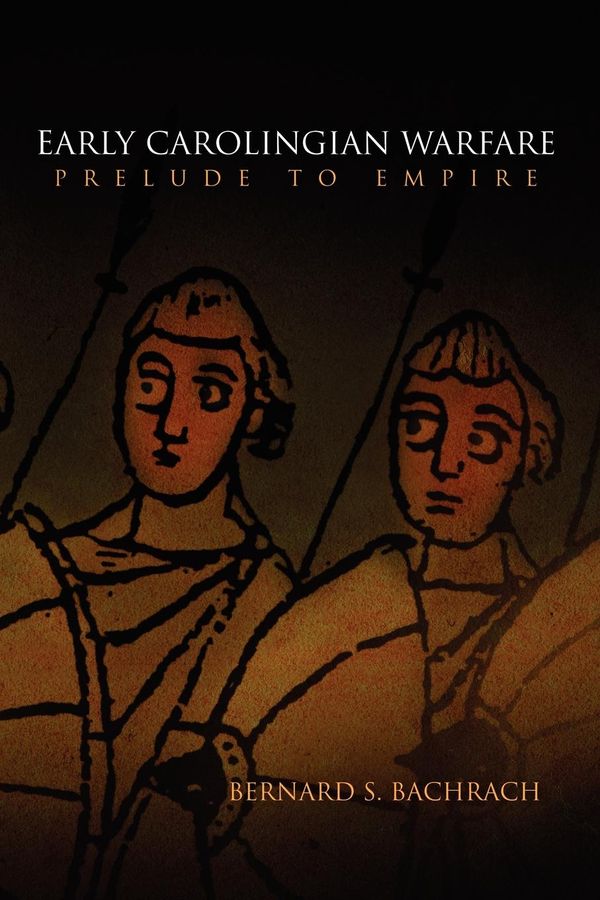
Early Carolingian Warfare
- Danskt band, Engelska, 2011
- Författare: Bernard S. Bachrach
- Betyg:
Skickas inom 1-3 vardagar
Vill du sälja den här boken?
Sälj den här bokenFler utgåvor
-
Black Metaphors (2019)
1021 kr
-
The Quest for the Christ Child in the Later Middle Ages (2017)
1105 kr
-
Before the Normans (1996)
315 kr
-
The Carolingians (1993)
403 kr
-
Land and Lordship (1992)
920 kr
-
History of the Lombards (1975)
364 kr


Beskrivning
Pippin II and his successors were not diverted by opportunities for financial enrichment in the short term through raids and campaigns outside of the regnum Francorum; they focused on conquest with sagacious sensibilities, preferring bloodless diplomatic solutions to unnecessarily destructive warfare, and disdained military glory for its own sake. But when they had to deploy their military forces, their operations were brutal and efficient. Their training was exceptionally well developed, and their techniques included hand-to-hand combat, regimented troop movements, fighting on horseback with specialized mounted soldiers, and the execution of lengthy sieges employing artillery. In order to sustain their long-term strategy, the early Carolingians relied on a late Roman model whereby soldiers were recruited from among the militarized population who were required by law to serve outside their immediate communities. The ability to mass and train large armies from among farmers and urban-dwellers gave the Carolingians the necessary power to lay siege to the old Roman fortress cities that dominated the military topography of the West.
Bachrach includes fresh accounts of Charles Martel's defeat of the Muslims at Poitiers in 732, and Pippin's successful siege of Bourges in 762, demonstrating that in the matter of warfare there never was a western European Dark Age that ultimately was enlightened by some later Renaissance. The early Carolingians built upon surviving military institutions, adopted late antique technology, and effectively utilized their classical intellectual inheritance to prepare the way militarily for Charlemagne's empire.
Om denna bok
Early Carolingian Warfare av Bernard S. Bachrach är en Danskt band bok med 432 sidor på Engelska. Den utgavs 2011 av Marston.
Spara pengar – köp begagnad från Campusbokhandeln
Köp Early Carolingian Warfare begagnad från Campusbokhandeln och spara upp till 25% jämfört med nypris. Du kan bevaka den här boken så får du ett mail så fort vi får in den i lager som begagnad.
Genom att köpa & sälja begagnat sänker du kostnaden för studier både för dig och nästa student samtidigt som du gör nytta för klimatet.
Produktinformation