Vi flyttar från butik till nätet - så funkar det framåt
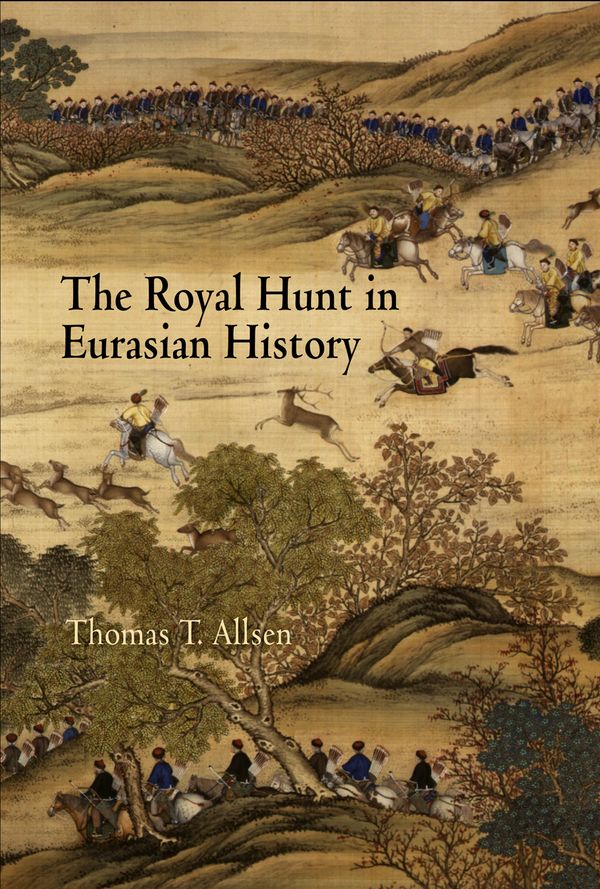
The Royal Hunt in Eurasian History | 0:e upplagan
- Danskt band, Engelska, 2006
- Författare: Thomas T. Allsen
- Betyg:
753
kr
Skickas inom 1-3 vardagar
Butikslager
Onlinelager
I lager hos leverantör
$event.detail.name === 'store-selector' ? isOpen = true : ''"
@close-drawer.window="() => $event.detail.name === 'store-selector' ? isOpen = false : ''"
@keydown.escape.window="isOpen = false"
x-init="$watch('isOpen', value => {
if (value) {
$refs.dialog.showModal();
document.body.style.overflow = 'hidden';
//emit onDrawerOpen event
$dispatch('drawer-opened', {
name: 'store-selector'
});
} else {
setTimeout(() => {
$refs.dialog.showModal();
$refs.dialog.close();
}, 300);
document.body.style.overflow = '';
$dispatch('drawer-closed', {
name: 'store-selector'
});
}
});"
class="h-full"
>
Fler utgåvor
Beskrivning
From antiquity to the nineteenth century, the royal hunt was a vital component of the political cultures of the Middle East, India, Central Asia, and China. Besides marking elite status, royal hunts functioned as inspection tours and imperial progresses, a means of asserting kingly authority over the countryside. The hunt was, in fact, the "court out-of-doors," an open-air theater for displays of majesty, the entertainment of guests, and the bestowal of favor on subjects.
In the conduct of interstate relations, great hunts were used to train armies, show the flag, and send diplomatic signals. Wars sometimes began as hunts and ended as celebratory chases. Often understood as a kind of covert military training, the royal hunt was subject to the same strict discipline as that applied in war and was also a source of innovation in military organization and tactics.
Just as human subjects were to recognize royal power, so was the natural kingdom brought within the power structure by means of the royal hunt. Hunting parks were centers of botanical exchange, military depots, early conservation reserves, and important links in local ecologies. The mastery of the king over nature served an important purpose in official renderings: as a manifestation of his possession of heavenly good fortune he could tame the natural world and keep his kingdom safe from marauding threats, human or animal. The exchanges of hunting partners-cheetahs, elephants, and even birds-became diplomatic tools as well as serving to create an elite hunting culture that transcended political allegiances and ecological frontiers.
This sweeping comparative work ranges from ancient Egypt to India under the Raj. With a magisterial command of contemporary sources, literature, material culture, and archaeology, Thomas T. Allsen chronicles the vast range of traditions surrounding this fabled royal occupation.
In the conduct of interstate relations, great hunts were used to train armies, show the flag, and send diplomatic signals. Wars sometimes began as hunts and ended as celebratory chases. Often understood as a kind of covert military training, the royal hunt was subject to the same strict discipline as that applied in war and was also a source of innovation in military organization and tactics.
Just as human subjects were to recognize royal power, so was the natural kingdom brought within the power structure by means of the royal hunt. Hunting parks were centers of botanical exchange, military depots, early conservation reserves, and important links in local ecologies. The mastery of the king over nature served an important purpose in official renderings: as a manifestation of his possession of heavenly good fortune he could tame the natural world and keep his kingdom safe from marauding threats, human or animal. The exchanges of hunting partners-cheetahs, elephants, and even birds-became diplomatic tools as well as serving to create an elite hunting culture that transcended political allegiances and ecological frontiers.
This sweeping comparative work ranges from ancient Egypt to India under the Raj. With a magisterial command of contemporary sources, literature, material culture, and archaeology, Thomas T. Allsen chronicles the vast range of traditions surrounding this fabled royal occupation.
Om denna bok
The Royal Hunt in Eurasian History av Thomas T. Allsen är en Danskt band bok med 277 sidor på Engelska. Den utgavs 2006 av Marston.
Spara pengar – köp begagnad från Campusbokhandeln
Köp The Royal Hunt in Eurasian History begagnad från Campusbokhandeln och spara upp till 25% jämfört med nypris. Du kan bevaka den här boken så får du ett mail så fort vi får in den i lager som begagnad.
Genom att köpa & sälja begagnat sänker du kostnaden för studier både för dig och nästa student samtidigt som du gör nytta för klimatet.
Produktinformation
Kategori:
Historia & arkeologi
Bandtyp:
Danskt band
Språk:
Engelska
ISBN:
9780812239263
Upplaga:
0
Utgiven:
2006-04-21
Förlag:
Marston
Sidantal:
277
$event.detail.name === 'primary-menu' ? isOpen = true : ''"
@close-drawer.window="() => $event.detail.name === 'primary-menu' ? isOpen = false : ''"
@keydown.escape.window="isOpen = false"
x-init="$watch('isOpen', value => {
if (value) {
$refs.dialog.showModal();
document.body.style.overflow = 'hidden';
//emit onDrawerOpen event
$dispatch('drawer-opened', {
name: 'primary-menu'
});
} else {
setTimeout(() => {
$refs.dialog.showModal();
$refs.dialog.close();
}, 300);
document.body.style.overflow = '';
$dispatch('drawer-closed', {
name: 'primary-menu'
});
}
});"
class="h-full"
>
$event.detail.name === 'mobile-search' ? isOpen = true : ''"
@close-drawer.window="() => $event.detail.name === 'mobile-search' ? isOpen = false : ''"
@keydown.escape.window="isOpen = false"
x-init="$watch('isOpen', value => {
if (value) {
$refs.dialog.showModal();
document.body.style.overflow = 'hidden';
//emit onDrawerOpen event
$dispatch('drawer-opened', {
name: 'mobile-search'
});
} else {
setTimeout(() => {
$refs.dialog.showModal();
$refs.dialog.close();
}, 300);
document.body.style.overflow = '';
$dispatch('drawer-closed', {
name: 'mobile-search'
});
}
});"
class="h-full"
>
$event.detail.name === 'mini-cart' ? isOpen = true : ''"
@close-drawer.window="() => $event.detail.name === 'mini-cart' ? isOpen = false : ''"
@keydown.escape.window="isOpen = false"
x-init="$watch('isOpen', value => {
if (value) {
$refs.dialog.showModal();
document.body.style.overflow = 'hidden';
//emit onDrawerOpen event
$dispatch('drawer-opened', {
name: 'mini-cart'
});
} else {
setTimeout(() => {
$refs.dialog.showModal();
$refs.dialog.close();
}, 300);
document.body.style.overflow = '';
$dispatch('drawer-closed', {
name: 'mini-cart'
});
}
});"
class="h-full"
>
$event.detail.name === 'add-to-cart' ? isOpen = true : ''"
@close-drawer.window="() => $event.detail.name === 'add-to-cart' ? isOpen = false : ''"
@keydown.escape.window="isOpen = false"
x-init="$watch('isOpen', value => {
if (value) {
$refs.dialog.showModal();
document.body.style.overflow = 'hidden';
//emit onDrawerOpen event
$dispatch('drawer-opened', {
name: 'add-to-cart'
});
} else {
setTimeout(() => {
$refs.dialog.showModal();
$refs.dialog.close();
}, 300);
document.body.style.overflow = '';
$dispatch('drawer-closed', {
name: 'add-to-cart'
});
}
});"
class="h-full"
>