Vi flyttar från butik till nätet - så funkar det framåt
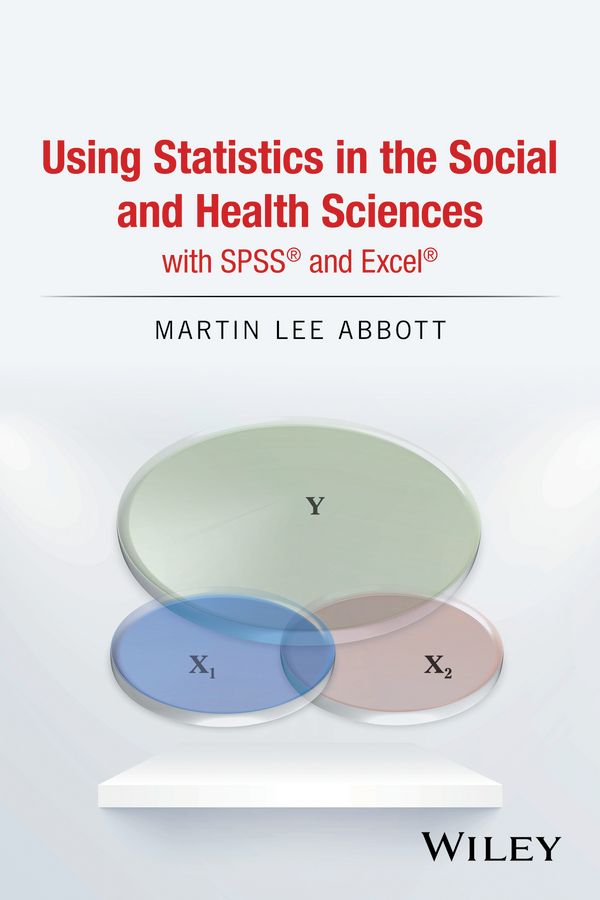
Using Statistics in the Social and Health Sciences with SPSS and Excel | 1:a upplagan
- Danskt band, Engelska, 2016
- Författare: Martin Lee Abbott
- Betyg:
1128
kr
Skickas nästa vardag
Du sparar 269 kr
(19%)
mot nypris
1397
kr
Skickas inom 1-3 vardagar
1000
kr
Skickas från säljare inom 1-3 vardagar
Nora
, Vallentuna
Verifierad säljare
Skickar snabbt
Du sparar 397 kr
(28%)
mot nypris
Butikslager
Onlinelager
8 st i lager
Beskrivning
Provides a step-by-step approach to statistical procedures to analyze data and conduct research, with detailed sections in each chapter explaining SPSS® and Excel® applications
This book identifies connections between statistical applications and research design using cases, examples, and discussion of specific topics from the social and health sciences. Researched and class-tested to ensure an accessible presentation, the book combines clear, step-by-step explanations for both the novice and professional alike to understand the fundamental statistical practices for organizing, analyzing, and drawing conclusions from research data in their field.
The book begins with an introduction to descriptive and inferential statistics and then acquaints readers with important features of statistical applications (SPSS and Excel) that support statistical analysis and decision making. Subsequent chapters treat the procedures commonly employed when working with data across various fields of social science research. Individual chapters are devoted to specific statistical procedures, each ending with lab application exercises that pose research questions, examine the questions through their application in SPSS and Excel, and conclude with a brief research report that outlines key findings drawn from the results. Real-world examples and data from social and health sciences research are used throughout the book, allowing readers to reinforce their comprehension of the material.
Using Statistics in the Social and Health Sciences with SPSS® and Excel® includes:
Use of straightforward procedures and examples that help students focus on understanding of analysis and interpretation of findings
Inclusion of a data lab section in each chapter that provides relevant, clear examples
Introduction to advanced statistical procedures in chapter sections (e.g., regression diagnostics) and separate chapters (e.g., multiple linear regression) for greater relevance to real-world research needs
Emphasizing applied statistical analyses, this book can serve as the primary text in undergraduate and graduate university courses within departments of sociology, psychology, urban studies, health sciences, and public health, as well as other related departments. It will also be useful to statistics practitioners through extended sections using SPSS® and Excel® for analyzing data.
This book identifies connections between statistical applications and research design using cases, examples, and discussion of specific topics from the social and health sciences. Researched and class-tested to ensure an accessible presentation, the book combines clear, step-by-step explanations for both the novice and professional alike to understand the fundamental statistical practices for organizing, analyzing, and drawing conclusions from research data in their field.
The book begins with an introduction to descriptive and inferential statistics and then acquaints readers with important features of statistical applications (SPSS and Excel) that support statistical analysis and decision making. Subsequent chapters treat the procedures commonly employed when working with data across various fields of social science research. Individual chapters are devoted to specific statistical procedures, each ending with lab application exercises that pose research questions, examine the questions through their application in SPSS and Excel, and conclude with a brief research report that outlines key findings drawn from the results. Real-world examples and data from social and health sciences research are used throughout the book, allowing readers to reinforce their comprehension of the material.
Using Statistics in the Social and Health Sciences with SPSS® and Excel® includes:
Use of straightforward procedures and examples that help students focus on understanding of analysis and interpretation of findings
Inclusion of a data lab section in each chapter that provides relevant, clear examples
Introduction to advanced statistical procedures in chapter sections (e.g., regression diagnostics) and separate chapters (e.g., multiple linear regression) for greater relevance to real-world research needs
Emphasizing applied statistical analyses, this book can serve as the primary text in undergraduate and graduate university courses within departments of sociology, psychology, urban studies, health sciences, and public health, as well as other related departments. It will also be useful to statistics practitioners through extended sections using SPSS® and Excel® for analyzing data.
Om denna bok
Using Statistics in the Social and Health Sciences with SPSS and Excel av Martin Lee Abbott är en Danskt band bok med 592 sidor på Engelska. Detta är den 1:a upplagan som utgavs 2016 av John Wiley And Sons Ltd.
Spara pengar – köp begagnad från Campusbokhandeln
Köp Using Statistics in the Social and Health Sciences with SPSS and Excel begagnad från Campusbokhandeln och spara upp till 28% jämfört med nypris. Begagnade exemplar finns från 1,000 kr medan nya kostar 1,397 kr – en besparing på 397 kr. Köp tryggt med Campusbokhandeln.
Genom att köpa & sälja begagnat sänker du kostnaden för studier både för dig och nästa student samtidigt som du gör nytta för klimatet.
Används vid svenska universitet
Denna kurslitteratur används aktivt i 2 universitetskurser vid lärosäten runt om i Sverige, inklusive:
Boken är särskilt populär inom Matematik & statistik-programmen.
Produktinformation
Kategori:
Matematik & statistik
Bandtyp:
Danskt band
Språk:
Engelska
ISBN:
9781119121046
Upplaga:
1
Utgiven:
2016-11-30
Förlag:
John Wiley And Sons Ltd
Sidantal:
592