Vi flyttar från butik till nätet - så funkar det framåt
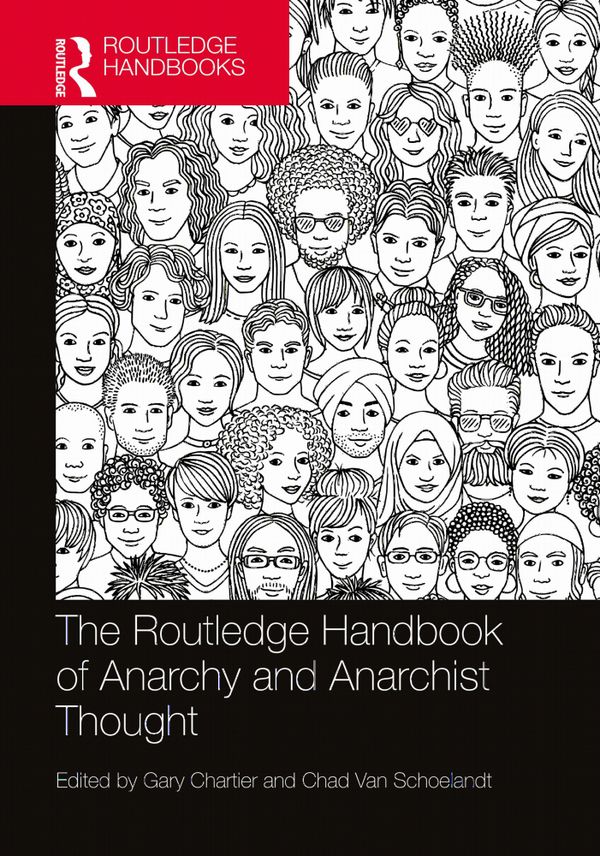
The Routledge Handbook of Anarchy and Anarchist Thought | 1:a upplagan
- Danskt band, Engelska, 2020
- Författare: Gary Chartier, Chad Van Schoelandt
- Betyg:
2962
kr
Skickas inom 1-3 vardagar
Onlinelager
I lager hos leverantör
Vill du sälja den här boken?
Sälj den här bokenFler utgåvor
-
The Routledge Handbook of Phenomenology of Agency (2023)
615 kr
-
The Routledge Handbook of Political Epistemology (2023)
587 kr
-
The Routledge Handbook of the Philosophy of Engineering (2020)
2962 kr
-
The Routledge Handbook of Feminist Philosophy of Science (2020)
3091 kr
-
The Routledge Handbook of Phenomenology of Agency (2020)
3330 kr
-
The Routledge Handbook of Evolution and Philosophy (2020)
719 kr
-
The Routledge Handbook of Consciousness (2020)
710 kr
-
The Routledge Handbook of Mechanisms and Mechanical Philosophy (2020)
763 kr
-
The Routledge Handbook of Philosophy and Science of Addiction (2020)
643 kr
-
The Routledge Handbook of Pacifism and Nonviolence (2020)
643 kr


Beskrivning
This Handbook offers an authoritative, up-to-date introduction to the rich scholarly conversation about anarchy—about the possibility, dynamics, and appeal of social order without the state. Drawing on resources from philosophy, economics, law, history, politics, and religious studies, it is designed to deepen understanding of anarchy and the development of anarchist ideas at a time when those ideas have attracted increasing attention.
The popular identification of anarchy with chaos makes sophisticated interpretations—which recognize anarchy as a kind of social order rather than an alternative to it—especially interesting. Strong, centralized governments have struggled to quell popular frustration even as doubts have continued to percolate about their legitimacy and long-term financial stability. Since the emergence of the modern state, concerns like these have driven scholars to wonder whether societies could flourish while abandoning monopolistic governance entirely.
Standard treatments of political philosophy frequently assume the justifiability and desirability of states, focusing on such questions as, What is the best kind of state? and What laws and policies should states adopt?, without considering whether it is just or prudent for states to do anything at all. This Handbook encourages engagement with a provocative alternative that casts more conventional views in stark relief.
Its 30 chapters, written specifically for this volume by an international team of leading scholars, are organized into four main parts:
I. Concept and Significance
II. Figures and Traditions
III. Legitimacy and Order
IV. Critique and Alternatives
In addition, a comprehensive index makes the volume easy to navigate and an annotated bibliography points readers to the most promising avenues of future research.
The popular identification of anarchy with chaos makes sophisticated interpretations—which recognize anarchy as a kind of social order rather than an alternative to it—especially interesting. Strong, centralized governments have struggled to quell popular frustration even as doubts have continued to percolate about their legitimacy and long-term financial stability. Since the emergence of the modern state, concerns like these have driven scholars to wonder whether societies could flourish while abandoning monopolistic governance entirely.
Standard treatments of political philosophy frequently assume the justifiability and desirability of states, focusing on such questions as, What is the best kind of state? and What laws and policies should states adopt?, without considering whether it is just or prudent for states to do anything at all. This Handbook encourages engagement with a provocative alternative that casts more conventional views in stark relief.
Its 30 chapters, written specifically for this volume by an international team of leading scholars, are organized into four main parts:
I. Concept and Significance
II. Figures and Traditions
III. Legitimacy and Order
IV. Critique and Alternatives
In addition, a comprehensive index makes the volume easy to navigate and an annotated bibliography points readers to the most promising avenues of future research.
Om denna bok
The Routledge Handbook of Anarchy and Anarchist Thought av Gary Chartier och Chad Van Schoelandt är en Danskt band bok med 478 sidor på Engelska. Detta är den 1:a upplagan som utgavs 2020.
Spara pengar – köp begagnad från Campusbokhandeln
Köp The Routledge Handbook of Anarchy and Anarchist Thought begagnad från Campusbokhandeln och spara upp till 25% jämfört med nypris. Du kan bevaka den här boken så får du ett mail så fort vi får in den i lager som begagnad.
Genom att köpa & sälja begagnat sänker du kostnaden för studier både för dig och nästa student samtidigt som du gör nytta för klimatet.
Produktinformation
Kategori:
Filosofi & idéhistoria
Bandtyp:
Danskt band
Språk:
Engelska
ISBN:
9781138737587
Upplaga:
1
Utgiven:
2020-12-31
Förlag:
Okänt
Sidantal:
478