Vi flyttar från butik till nätet - så funkar det framåt
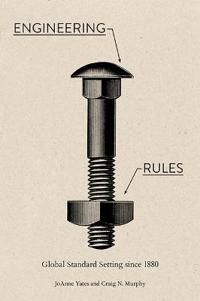
Engineering Rules | 0:e upplagan
- Danskt band, Engelska, 2019
- Författare: Craig N. Murphy, JoAnne Yates
- Betyg:
691
kr
Skickas inom 1-3 vardagar
Butikslager
Onlinelager
I lager hos leverantör
$event.detail.name === 'store-selector' ? isOpen = true : ''"
@close-drawer.window="() => $event.detail.name === 'store-selector' ? isOpen = false : ''"
@keydown.escape.window="isOpen = false"
x-init="$watch('isOpen', value => {
if (value) {
$refs.dialog.showModal();
document.body.style.overflow = 'hidden';
//emit onDrawerOpen event
$dispatch('drawer-opened', {
name: 'store-selector'
});
} else {
setTimeout(() => {
$refs.dialog.showModal();
$refs.dialog.close();
}, 300);
document.body.style.overflow = '';
$dispatch('drawer-closed', {
name: 'store-selector'
});
}
});"
class="h-full"
>
Beskrivning
The first global history of voluntary consensus standard setting.
Finalist, Hagley Prize in Business History, The Hagley Museum and Library / The Business History Conference
Private, voluntary standards shape almost everything we use, from screw threads to shipping containers to e-readers. They have been critical to every major change in the world economy for more than a century, including the rise of global manufacturing and the ubiquity of the internet. In Engineering Rules, JoAnne Yates and Craig N. Murphy trace the standard-setting system's evolution through time, revealing a process with an astonishingly pervasive, if rarely noticed, impact on all of our lives.
This type of standard setting was established in the 1880s, when engineers aimed to prove their status as professionals by creating useful standards that would be widely adopted by manufacturers while satisfying corporate customers. Yates and Murphy explain how these engineers' processes provided a timely way to set desirable standards that would have taken much longer to emerge from the market and that governments were rarely willing to set. By the 1920s, the standardizers began to think of themselves as critical to global prosperity and world peace. After World War II, standardizers transcended Cold War divisions to create standards that made the global economy possible. Finally, Yates and Murphy reveal how, since 1990, a new generation of standardizers has focused on supporting the internet and web while applying the same standard-setting process to regulate the potential social and environmental harms of the increasingly global economy.
Drawing on archival materials from three continents, Yates and Murphy describe the positive ideals that sparked the standardization movement, the ways its leaders tried to realize those ideals, and the challenges the movement faces today. Engineering Rules is a riveting global history of the people, processes, and organizations that created and maintain this nearly invisible infrastructure of today's economy, which is just as important as the state or the global market.
Finalist, Hagley Prize in Business History, The Hagley Museum and Library / The Business History Conference
Private, voluntary standards shape almost everything we use, from screw threads to shipping containers to e-readers. They have been critical to every major change in the world economy for more than a century, including the rise of global manufacturing and the ubiquity of the internet. In Engineering Rules, JoAnne Yates and Craig N. Murphy trace the standard-setting system's evolution through time, revealing a process with an astonishingly pervasive, if rarely noticed, impact on all of our lives.
This type of standard setting was established in the 1880s, when engineers aimed to prove their status as professionals by creating useful standards that would be widely adopted by manufacturers while satisfying corporate customers. Yates and Murphy explain how these engineers' processes provided a timely way to set desirable standards that would have taken much longer to emerge from the market and that governments were rarely willing to set. By the 1920s, the standardizers began to think of themselves as critical to global prosperity and world peace. After World War II, standardizers transcended Cold War divisions to create standards that made the global economy possible. Finally, Yates and Murphy reveal how, since 1990, a new generation of standardizers has focused on supporting the internet and web while applying the same standard-setting process to regulate the potential social and environmental harms of the increasingly global economy.
Drawing on archival materials from three continents, Yates and Murphy describe the positive ideals that sparked the standardization movement, the ways its leaders tried to realize those ideals, and the challenges the movement faces today. Engineering Rules is a riveting global history of the people, processes, and organizations that created and maintain this nearly invisible infrastructure of today's economy, which is just as important as the state or the global market.
Om denna bok
Engineering Rules av Craig N. Murphy och JoAnne Yates är en Danskt band bok med 440 sidor på Engelska. Den utgavs 2019 av Johns Hopkins University Press.
Spara pengar – köp begagnad från Campusbokhandeln
Köp Engineering Rules begagnad från Campusbokhandeln och spara upp till 25% jämfört med nypris. Du kan bevaka den här boken så får du ett mail så fort vi får in den i lager som begagnad.
Genom att köpa & sälja begagnat sänker du kostnaden för studier både för dig och nästa student samtidigt som du gör nytta för klimatet.
Produktinformation
Kategori:
Okänd
Bandtyp:
Danskt band
Språk:
Engelska
ISBN:
9781421428895
Upplaga:
0
Utgiven:
2019-08-06
Förlag:
Johns Hopkins University Press
Sidantal:
440
$event.detail.name === 'primary-menu' ? isOpen = true : ''"
@close-drawer.window="() => $event.detail.name === 'primary-menu' ? isOpen = false : ''"
@keydown.escape.window="isOpen = false"
x-init="$watch('isOpen', value => {
if (value) {
$refs.dialog.showModal();
document.body.style.overflow = 'hidden';
//emit onDrawerOpen event
$dispatch('drawer-opened', {
name: 'primary-menu'
});
} else {
setTimeout(() => {
$refs.dialog.showModal();
$refs.dialog.close();
}, 300);
document.body.style.overflow = '';
$dispatch('drawer-closed', {
name: 'primary-menu'
});
}
});"
class="h-full"
>
$event.detail.name === 'mobile-search' ? isOpen = true : ''"
@close-drawer.window="() => $event.detail.name === 'mobile-search' ? isOpen = false : ''"
@keydown.escape.window="isOpen = false"
x-init="$watch('isOpen', value => {
if (value) {
$refs.dialog.showModal();
document.body.style.overflow = 'hidden';
//emit onDrawerOpen event
$dispatch('drawer-opened', {
name: 'mobile-search'
});
} else {
setTimeout(() => {
$refs.dialog.showModal();
$refs.dialog.close();
}, 300);
document.body.style.overflow = '';
$dispatch('drawer-closed', {
name: 'mobile-search'
});
}
});"
class="h-full"
>
$event.detail.name === 'mini-cart' ? isOpen = true : ''"
@close-drawer.window="() => $event.detail.name === 'mini-cart' ? isOpen = false : ''"
@keydown.escape.window="isOpen = false"
x-init="$watch('isOpen', value => {
if (value) {
$refs.dialog.showModal();
document.body.style.overflow = 'hidden';
//emit onDrawerOpen event
$dispatch('drawer-opened', {
name: 'mini-cart'
});
} else {
setTimeout(() => {
$refs.dialog.showModal();
$refs.dialog.close();
}, 300);
document.body.style.overflow = '';
$dispatch('drawer-closed', {
name: 'mini-cart'
});
}
});"
class="h-full"
>
$event.detail.name === 'add-to-cart' ? isOpen = true : ''"
@close-drawer.window="() => $event.detail.name === 'add-to-cart' ? isOpen = false : ''"
@keydown.escape.window="isOpen = false"
x-init="$watch('isOpen', value => {
if (value) {
$refs.dialog.showModal();
document.body.style.overflow = 'hidden';
//emit onDrawerOpen event
$dispatch('drawer-opened', {
name: 'add-to-cart'
});
} else {
setTimeout(() => {
$refs.dialog.showModal();
$refs.dialog.close();
}, 300);
document.body.style.overflow = '';
$dispatch('drawer-closed', {
name: 'add-to-cart'
});
}
});"
class="h-full"
>