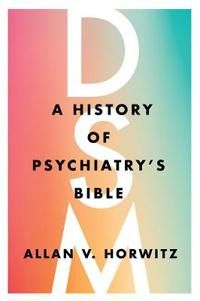
DSM
- Danskt band, Engelska, 2021
- Författare: Allan V. Horwitz
- Betyg:
415
kr
Skickas inom 6-17 vardagar
Onlinelager
I lager hos leverantör
Vill du sälja den här boken?
Sälj den här bokenBeskrivning
The first comprehensive history of "psychiatry's bible"—the Diagnostic and Statistical Manual of Mental Disorders.
Over the past seventy years, the Diagnostic and Statistical Manual of Mental Disorders, or DSM, has evolved from a virtually unknown and little-used pamphlet to an imposing and comprehensive compendium of mental disorder. Its nearly 300 conditions have become the touchstones for the diagnoses that patients receive, students are taught, researchers study, insurers reimburse, and drug companies promote. Although the manual is portrayed as an authoritative corpus of psychiatric knowledge, it is a product of intense political conflicts, dissension, and factionalism. The manual results from struggles among psychiatric researchers and clinicians, different mental health professions, and a variety of patient, familial, feminist, gay, and veterans' interest groups. The DSM is fundamentally a social document that both reflects and shapes the professional, economic, and cultural forces associated with its use.
In DSM, Allan V. Horwitz examines how the manual, known colloquially as "psychiatry's bible," has been at the center of thinking about mental health in the United States since its original publication in 1952. The first book to examine its entire history, this volume draws on both archival sources and the literature on modern psychiatry to show how the history of the DSM is more a story of the growing social importance of psychiatric diagnoses than of increasing knowledge about the nature of mental disorder. Despite attempts to replace it, Horwitz argues that the DSM persists because its diagnostic entities are closely intertwined with too many interests that benefit from them.
This comprehensive treatment should appeal to not only specialists but also anyone who is interested in how diagnoses of mental illness have evolved over the past seven decades—from unwanted and often imposed labels to resources that lead to valued mental health treatments and social services.
Over the past seventy years, the Diagnostic and Statistical Manual of Mental Disorders, or DSM, has evolved from a virtually unknown and little-used pamphlet to an imposing and comprehensive compendium of mental disorder. Its nearly 300 conditions have become the touchstones for the diagnoses that patients receive, students are taught, researchers study, insurers reimburse, and drug companies promote. Although the manual is portrayed as an authoritative corpus of psychiatric knowledge, it is a product of intense political conflicts, dissension, and factionalism. The manual results from struggles among psychiatric researchers and clinicians, different mental health professions, and a variety of patient, familial, feminist, gay, and veterans' interest groups. The DSM is fundamentally a social document that both reflects and shapes the professional, economic, and cultural forces associated with its use.
In DSM, Allan V. Horwitz examines how the manual, known colloquially as "psychiatry's bible," has been at the center of thinking about mental health in the United States since its original publication in 1952. The first book to examine its entire history, this volume draws on both archival sources and the literature on modern psychiatry to show how the history of the DSM is more a story of the growing social importance of psychiatric diagnoses than of increasing knowledge about the nature of mental disorder. Despite attempts to replace it, Horwitz argues that the DSM persists because its diagnostic entities are closely intertwined with too many interests that benefit from them.
This comprehensive treatment should appeal to not only specialists but also anyone who is interested in how diagnoses of mental illness have evolved over the past seven decades—from unwanted and often imposed labels to resources that lead to valued mental health treatments and social services.
Om denna bok
DSM av Allan V. Horwitz är en Danskt band bok med 232 sidor på Engelska. Den utgavs 2021 av Johns Hopkins University Press.
Spara pengar – köp begagnad från Campusbokhandeln
Köp DSM begagnad från Campusbokhandeln och spara upp till 25% jämfört med nypris. Du kan bevaka den här boken så får du ett mail så fort vi får in den i lager som begagnad.
Genom att köpa & sälja begagnat sänker du kostnaden för studier både för dig och nästa student samtidigt som du gör nytta för klimatet.
Produktinformation
Kategori:
Okänd
Bandtyp:
Danskt band
Språk:
Engelska
ISBN:
9781421440699
Utgiven:
2021-10-12
Förlag:
Johns Hopkins University Press
Sidantal:
232