Vi flyttar från butik till nätet - så funkar det framåt
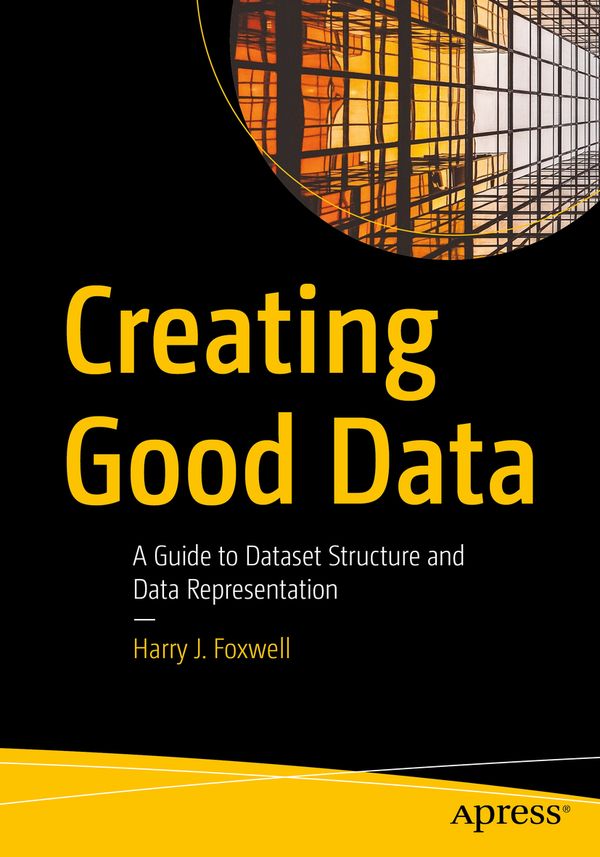
Creating Good Data | 1:a upplagan
- Danskt band, Engelska, 2020
- Författare: Harry J. Foxwell
- Betyg:
502
kr
Skickas inom 1-3 vardagar
Onlinelager
I lager hos leverantör
Vill du sälja den här boken?
Sälj den här bokenBeskrivning
Create good data from the start, rather than fixing it after it is collected. By following the guidelines in this book, you will be able to conduct more effective analyses and produce timely presentations of research data.
Data analysts are often presented with datasets for exploration and study that are poorly designed, leading to difficulties in interpretation and to delays in producing meaningful results. Much data analytics training focuses on how to clean and transform datasets before serious analyses can even be started. Inappropriate or confusing representations, unit of measurement choices, coding errors, missing values, outliers, etc., can be avoided by using good dataset design and by understanding how data types determine the kinds of analyses which can be performed.
This book discusses the principles and best practices of dataset creation, and covers basic data types and their related appropriate statistics and visualizations. A key focus of the book is why certain data types are chosen for representing concepts and measurements, in contrast to the typical discussions of how to analyze a specific data type once it has been selected.
What You Will Learn
Be aware of the principles of creating and collecting data
Know the basic data types and representations
Select data types, anticipating analysis goals
Understand dataset structures and practices for analyzing and sharing
Be guided by examples and use cases (good and bad)
Use cleaning tools and methods to create good data
Who This Book Is For
Researchers who design studies and collect data and subsequently conduct and report the results of their analyses can use the best practices in this book to produce better descriptions and interpretations of their work. In addition, data analysts who explore and explain data of other researchers will be able to create better datasets.
Data analysts are often presented with datasets for exploration and study that are poorly designed, leading to difficulties in interpretation and to delays in producing meaningful results. Much data analytics training focuses on how to clean and transform datasets before serious analyses can even be started. Inappropriate or confusing representations, unit of measurement choices, coding errors, missing values, outliers, etc., can be avoided by using good dataset design and by understanding how data types determine the kinds of analyses which can be performed.
This book discusses the principles and best practices of dataset creation, and covers basic data types and their related appropriate statistics and visualizations. A key focus of the book is why certain data types are chosen for representing concepts and measurements, in contrast to the typical discussions of how to analyze a specific data type once it has been selected.
What You Will Learn
Be aware of the principles of creating and collecting data
Know the basic data types and representations
Select data types, anticipating analysis goals
Understand dataset structures and practices for analyzing and sharing
Be guided by examples and use cases (good and bad)
Use cleaning tools and methods to create good data
Who This Book Is For
Researchers who design studies and collect data and subsequently conduct and report the results of their analyses can use the best practices in this book to produce better descriptions and interpretations of their work. In addition, data analysts who explore and explain data of other researchers will be able to create better datasets.
Om denna bok
Creating Good Data av Harry J. Foxwell är en Danskt band bok med 105 sidor på Engelska. Detta är den 1:a upplagan som utgavs 2020 av Springer Nature.
Spara pengar – köp begagnad från Campusbokhandeln
Köp Creating Good Data begagnad från Campusbokhandeln och spara upp till 25% jämfört med nypris. Du kan bevaka den här boken så får du ett mail så fort vi får in den i lager som begagnad.
Genom att köpa & sälja begagnat sänker du kostnaden för studier både för dig och nästa student samtidigt som du gör nytta för klimatet.
Produktinformation
Kategori:
Data & IT
Bandtyp:
Danskt band
Språk:
Engelska
ISBN:
9781484261026
Upplaga:
1
Utgiven:
2020-10-02
Förlag:
Springer Nature
Sidantal:
105