Sälj dina kursböcker, vinn presentkort på 1000 kr. Läs mer här

Logga in
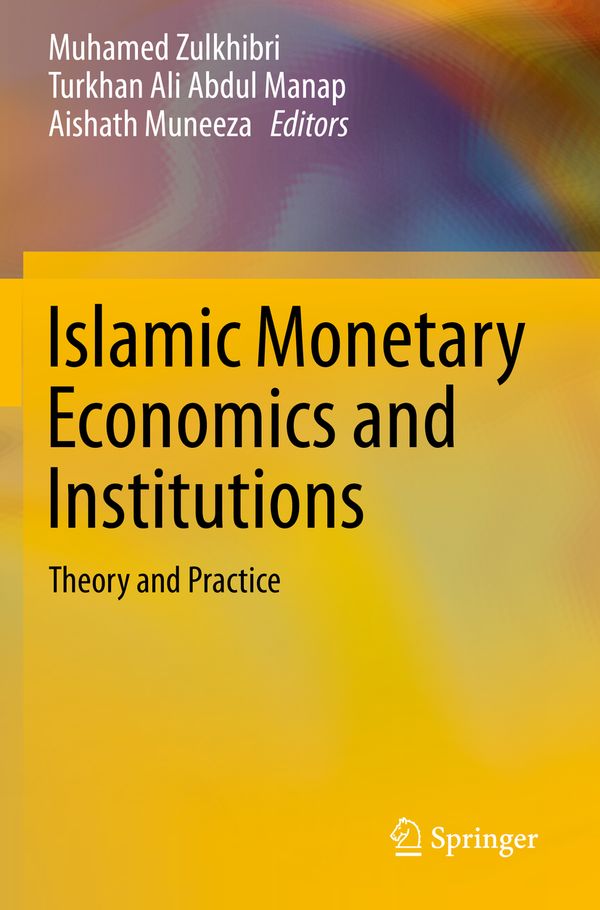
Islamic Monetary Economics and Institutions | 1:a upplagan

Islamic Monetary Economics and Institutions | 1:a upplagan

  • Häftad, Engelska, 2020
  • Författare: Muhamed Zulkhibri, Turkhan Ali Abdul Manap
  • Betyg:
934
kr
Helt ny

Skickas inom 0-2 vardagar

Butikslager
Onlinelager
I lager hos leverantör
Välj butik

Beskrivning

This edited volume explores theoretical and empirical issues related to monetary economics and policy in the Islamic financial system. Derived from the Conference on Islamic Monetary Economics and Institutions: Theory and Practice 2017 held in Malé, Maldives, the enclosed papers highlights several option for authorities and regulatory bodies regarding monetary policy and regulation, as well as discussing how Islamic monetary policy effects growth, financial stability and resilience to shocks in practice. The inter-linkage between Islamic monetary policy and other markets are also explored. 

The subject of Islamic economics has gained considerable attention in the last four decades with the emergence of Islamic financial institutions around the world. This phenomenon has motivated economists to develop a comprehensive theoretical framework of modern monetary economics for Islamic economic system. An important characteristic of the Islamic economic system is the abolition of interest from the financial system. Islamic monetary economics is distinguished from conventional monetary economics due to the absence of interest. Therefore, under the Islamic economic system, monetary policy has to depend on other tools. In the early theoretical literature on Islamic monetary economics, many have discussed the role of money in Islamic economics system, while the number of empirical studies on Islamic monetary economics is a relatively new phenomenon. According to Islamic scholars, there are three main goals of Islamic monetary policy: a) economic well-being with full employment and optimum rate of economic growth; b) socioeconomic justice and equitable distribution of income and wealth and c) stability in the value of money. Hence, the Islamic monetary policy has several socioeconomic and ethical implications.
 
Featuring regional case studies, this book serves as a valuable resource for academics, scholars, practitioners and policy makers in the areas of Islamic economics and finance.

Om denna bok

Islamic Monetary Economics and Institutions av Muhamed Zulkhibri och Turkhan Ali Abdul Manap är en Häftad bok med 201 sidor på Engelska. Detta är den 1:a upplagan som utgavs 2020 av Springer Nature.

Spara pengar – köp begagnad från Campusbokhandeln

Köp Islamic Monetary Economics and Institutions begagnad från Campusbokhandeln och spara upp till 25% jämfört med nypris. Du kan bevaka den här boken så får du ett mail så fort vi får in den i lager som begagnad.

Genom att köpa & sälja begagnat sänker du kostnaden för studier både för dig och nästa student samtidigt som du gör nytta för klimatet.

Produktinformation

Bandtyp:
Häftad
Språk:
Engelska
ISBN:
9783030240073
Upplaga:
1
Utgiven:
2020-10-15
Förlag:
Springer Nature
Sidantal:
201

Sök

Varukorg

Din varukorg är tom
Köp Sälj Sök Meny