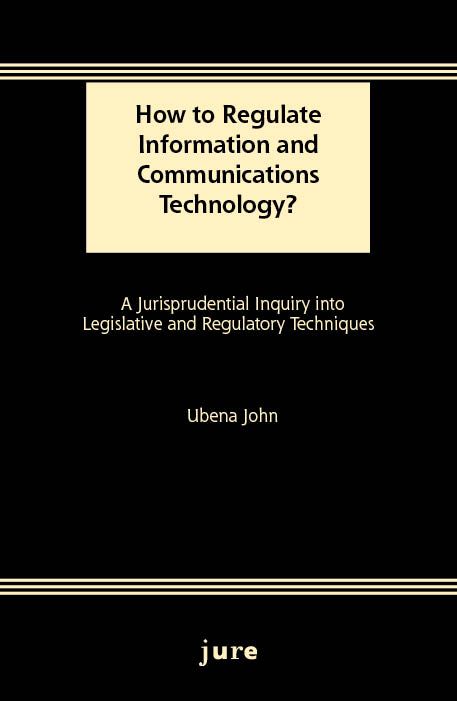
How to Regulate Information and Communications Technology? - A Jurisprudential Inquiry into Legislative and Regulatory Technique | 1:a upplagan
- Häftad, Engelska, 2015
- Författare: Ubena John
- Betyg:
Skickas inom 1-3 vardagar
Vill du sälja den här boken?
Sälj den här bokenBeskrivning
Som ett alternativ till traditionell lagstiftning har utvecklats en ny regleringskultur (New Regulatory Culture, NRC). Vid sidan av traditionell lagstiftning inbegrips bland annat tekniska skyddsmekanismer, diverse frivilliga regleringsmodeller (grundade på kontraktsfrihet), proaktiva modeller, lösningar baserade på ekonomiska incitament, samt ett skifte från konkreta handlingsdirigerande normer (kvantitativt formulerade normer) till aktsamhetsnormer (kvalitativt formulerade normer).
I denna nya bok belyser författaren den traditionella lagstiftningsteknikens tillkortakommanden på IKT-området och analyserar de möjligheter och risker som är förenade med en NRC. Kriterierna för att utvärdera en NRC inbegriper funktionell effektivitet och möjligheterna att upprätthålla rättsstatens principer respektive grundläggande fri- och rättigheter.
Tre centrala problemområden inom IKT-rätten analyseras: digital upphovsrätt, web-telefoni samt frågan om nätneutralitet. Utifrån identifierade regleringsproblem på de utvalda områdena diskuteras en alternativ regleringsmodell. Denna kombinerar en rad olika ansatser, såväl traditionell lagstiftningsteknik som NRC och kan anpassas efter behov. Undersökningen visar hur olika approacher kan tillämpas, för att hantera olika typer av problem och för att nå olika syften. Slutsatsen är att den föreslagna regleringsmodellen har fördelar då det handlar om att styra utvecklingen av IKT så att negativa bieffekter minimeras och utan att grundläggande rättsprinciper äventyras.
ICT transformations have enabled emergence of new goods, services and applications that have changed the way behaviours are conducted. Moreover, ICT goods have been transformed into services, blurring the legal categories and frequently creating conflicts of interests and imbalances. In other cases fundamental rights have been threatened.
The traditional legislative techniques (TLTs) regime based on command and control regulation has responded by banning certain applications or criminalising certain behaviours. But that risks stifling innovation, and expanding the imbalances, as well as facing practical ineffectiveness.
As a starting point to addressing the problem, emerged a New Regulatory Culture (NRC), reflecting various regulatory approaches, legalistic, technical measures of protection, complementary strategies based on freedom of contract, proactive ones based on economic incentives, disclosures, and a shift from behaviour norms to duty of care norms.
This study explores the shortcomings of the TLTs and draws the potentialities and risks of the application of NRC in ICT regulation. Three problem areas, digital copyright, Voice over Internet Protocol and net neutrality principle in which various approaches have been employed are analysed. It is concluded that the understanding of the NRC is essential in enabling the regulation to balance ICT innovations, and other interests such as the Rule of law and fundamental rights.
The book’s intended readership includes lawyers, legislators, regulators, ICT vendors, and anyone interested in technology regulation, practice of legislation, and contemporary regulatory approaches.
Om denna bok
How to Regulate Information and Communications Technology? - A Jurisprudential Inquiry into Legislative and Regulatory Technique av Ubena John är en Häftad bok med 492 sidor på Engelska. Detta är den 1:a upplagan som utgavs 2015 av Jure Förlag.
Spara pengar – köp begagnad från Campusbokhandeln
Köp How to Regulate Information and Communications Technology? - A Jurisprudential Inquiry into Legislative and Regulatory Technique begagnad från Campusbokhandeln och spara upp till 25% jämfört med nypris. Du kan bevaka den här boken så får du ett mail så fort vi får in den i lager som begagnad.
Genom att köpa & sälja begagnat sänker du kostnaden för studier både för dig och nästa student samtidigt som du gör nytta för klimatet.
Produktinformation